
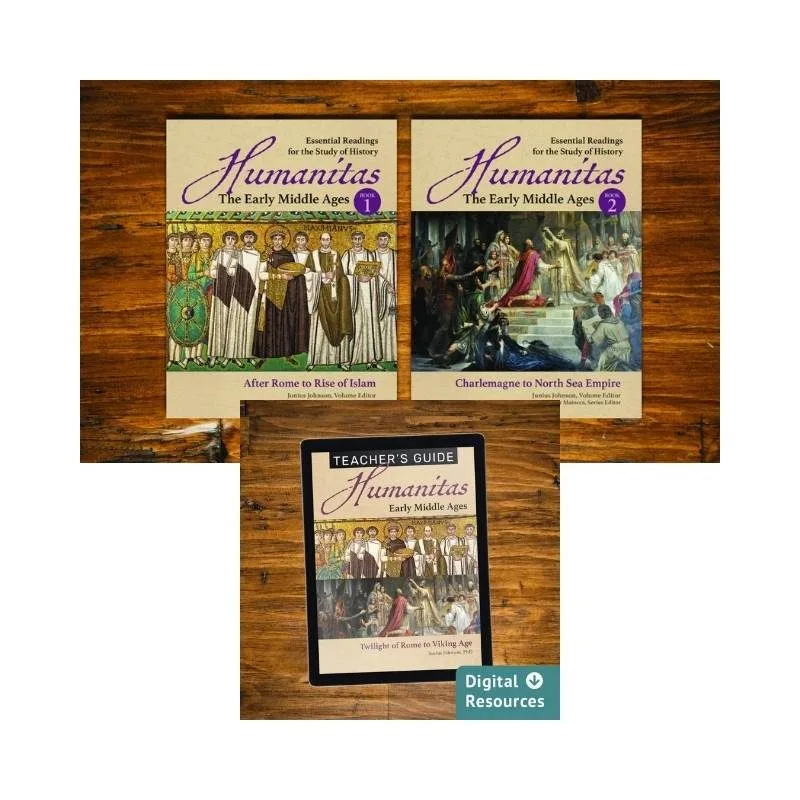
Description
With the rise of Christianity and the foundering of Rome, the medieval period begins in crisis.
The Early Middle Ages books move from pressing questions about the relationship between the Church and state to the establishment of a Holy Roman Empire.
Students will discover that the medieval period, commonly known as “the Dark Ages,” was anything but dark as these books chart the maturation of the liberal arts, the advances of science and culture that accompanied a renaissance of learning, and the development of political theory and practice as various states and kingdoms are established.
Humanitas Early Middle Ages Teacher’s Guide PDF offers teachers further resources for understanding the texts included in Humanitas Early Middle Ages Books 1 and 2.
The guide supplies teachers with: lesson objectives and plans teacher’s tips that point to specific portions of the source document, providing additional context for the source documents and suggesting points of discussion additional notes that will help teachers show students how the various source documents relate to each other questions for discussion and writing
*
Unlike most contemporary approaches to history, which reflect the fashions and biases of the fleeting present, the Humanitas series offers students something more substantial..
Following C. S. Lewis’s stout defense of reading primary sources in “On the Reading of Old Books,” Humanitas will help “persuade the young that firsthand knowledge is not only more worth acquiring than secondhand knowledge, but it is usually much easier and more delightful to acquire.”
*
To see all the titles in the Humanitas program, please click here.








Reviews
There are no reviews yet.