
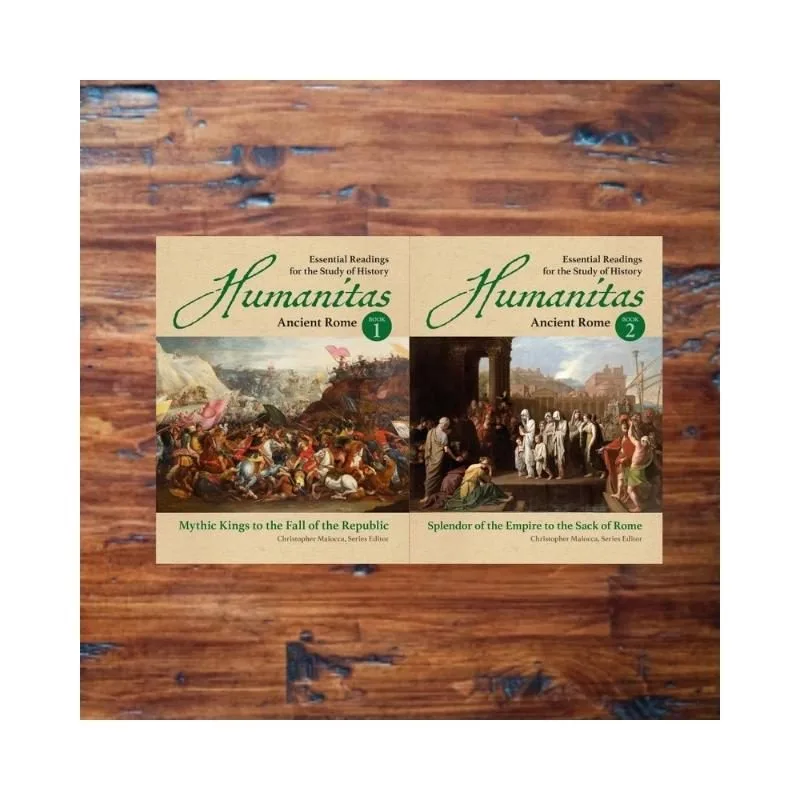
Description
Book One Sample
Book Two Sample
Table of Contents (Books 1 & 2)
These books begin with the founding myths, chart the wars with Carthage and the influence of Hellenism, and cover the establishment and breaking of the Roman empire.
Along the way, the documents in these books will illustrate the virtues that defined Roman citizenship, chart the birth and spread of Christianity, and provide insight into Roman education, philosophy, and material culture.
The 50 chapters include:
Selections from the golden age of Latin poetry by Virgil, Horace, Ovid, and Catullus, which serve to define artistic ideals in the classical world and later inspire poets such as Dante, Shakespeare, and Alexander Pope
Documents that offer a window into life in Rome, whether Petronius on Roman luxury,
Martial’s depiction of Roman games and the arena,
Accounts of Roman women
Pagan and Christian accounts of the rise of Christianity and the fall of Rome
Texts, such as Caesar’s, that depict the various struggles for power that define the Roman Empire
*
Rooted in the Renaissance humanists’ clarion call to return ad fontes, this brand-new upper school humanities curriculum promises to bring students “back to the sources.”
Unlike most contemporary approaches to history, which reflect the fashions and biases of the fleeting present, the Humanitas series offers students something more substantial.
Following C. S. Lewis’ stout defense of reading primary sources in “On the Reading of Old Books,” Humanitas will help “persuade the young that firsthand knowledge is not only more worth acquiring than secondhand knowledge, but it is usually much easier and more delightful to acquire.”
*
To see all the titles in the Humanitas program, please click here.












Reviews
There are no reviews yet.